



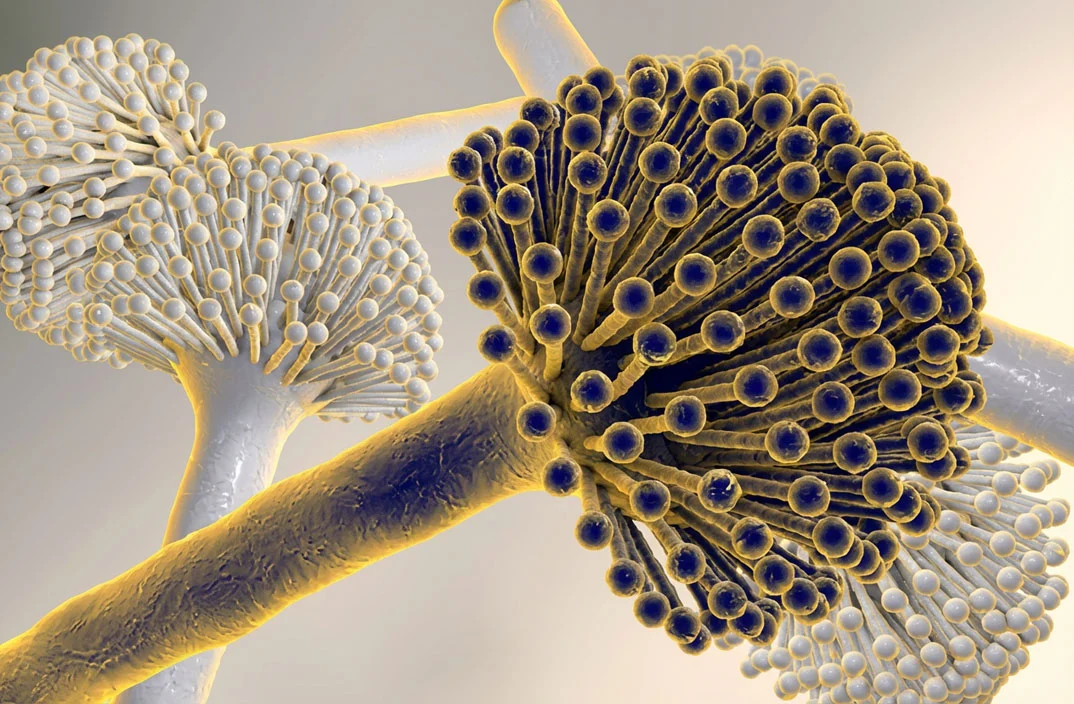
Mycotoxins are toxic metabolites produced by fungi that contaminate feedstuffs and feed, posing an important threat to livestock production. About 55% of raw materials for livestock in South America are indicated to be contaminated with mycotoxins.
The toxicity and adverse effects of mycotoxins also vary based on many factors, such as route of administration, time and amount of exposure, dose consumed, and immune status. In general, younger animals are more sensitive to mycotoxins than older animals (Magnoli et al., 2019).
Over the years, several papers have been published on mycotoxin challenges, as described in the following table (Table 1).
| Mycotoxin | Affected organ | Toxicity | |
| Aflatoxicin | AFB1, AFB2, AFG1 and AFG2 | Hepatotoxicity, carcinogenic and teratogenic effects | Birds:+++ Pigs:++ Fish:++ |
| Trichothecenes | DON, NIV (type B), T-2 and HT-2 (type A) | Immunological effects, Hematological changes, digestive disorders, dermatitis, oral lesions, intestinal bleeding and edema | Birds:++ Pigs:++ Fish:++ |
| Zearalenone | ZEA | Estrogenic effects, testicular and ovarian atrophy, abortions | Birds:+ Pigs:+++ Fish:+++ |
| Ochratoxin | OT (type A) | Nephrotoxicity, porcine nephropathy, mild liver damage, immune suppression | Birds:+++ Pigs:++ Fish:++ |
| Fumonisins | FB1 and FB2 | Porcine pulmonary edema |
Birds:+ Pigs:+++ Fish:++ |
| +++High toxicity; +++Moderate toxicity; +Mild toxicity (Adapted from Magnoli et al., 2019) | |||
Some fundamental strategies are needed to minimize the impact of mycotoxins, such as improved farming practices and good storage to avoid mold proliferation, continuous monitoring of raw materials and feed to detect the presence of mycotoxins, and the use of feed additives toxin binders to make mycotoxins unavailable and/or inactivate them along the digestive tract and avoid their negative effects.
One of the additives available on the market is yeast (Saccharomyces cerevisiae) cell wall extract, which is rich in insoluble functional carbohydrates, β-glucans, and MOS, which have a high affinity for mycotoxins. β-glucans bind to mycotoxins through van der Waals and hydrogen bonds, thereby limiting their ability to reach the systemic circulation and reducing their toxic effects.
In addition to direct binding, β-glucans may affect mycotoxin biotransformation by modulating the activity of liver enzymes important for detoxification. These enzymes, such as cytochrome P450, glutathione S-transferase, and glycosyltransferase, play an important role in converting mycotoxins into less toxic and more water-soluble metabolites, making them easier to excrete from the body.
ICC Brazil and BEC have a sustainable nutritional solution to the mycotoxin problem with the use of Starfix. The advantage lies in the yeast, which is a secondary fermentation yeast, with mature cells that have a high concentration of b-glucan due to the fermentation process (low pH, high temperature, and ethanol concentration). This makes it more difficult to digest and functional in mycotoxin absorption. By using Starfix, producers can ensure better safety and performance for their livestock, thereby reducing economic losses and increasing production profitability.
Simplifying Layer Feed Formulations Using BEC’s Smart Premix
Introduction Linear simplification can be directly equated with efficiency—this is the principle that PT BEC [...]
BEC Feed Solutions Indonesia’s Commitment to Mycotoxin Control
With the rainy season coming, mycotoxins are again a real threat to poultry farming and [...]
Feed Efficiency as the Key to Profitability
Amid the challenges of layer (egg-laying chicken) production in hot and fluctuating tropical climates, collaboration [...]
How to become a champion in the layer business? – Layer Solution Day
Success in the poultry sector requires a holistic approach, as many factors influence performance. Collaboration [...]
Mycotoxins in Monogastrics: The Invisible Enemy for Continued Livestock Production
Mycotoxins are toxic metabolites produced by fungi that contaminate raw materials and feed, which are an important threat to livestock production [...]
BEC, Novonesis, Phospea, and Jefo synergize for LEP Expo & Conference 2025
BEC Feed Solutions Indonesia (BEC) together with Jefo, Novonesis, and Phosphea collaborated at the LEP [...]
BEC & Novonesis Release Bovacillus & SiloSolve® FC
On May 13, 2025, BEC together with Novonesis held a new product launch of Bovacillus [...]
Layer Solutions Day (LSD) 2025 in Blitar became a forum for discussion of layer breeders.
Layer Solutions Day is a regular event for BEC, Big Dutchman and Hendrix Genetics. On [...]